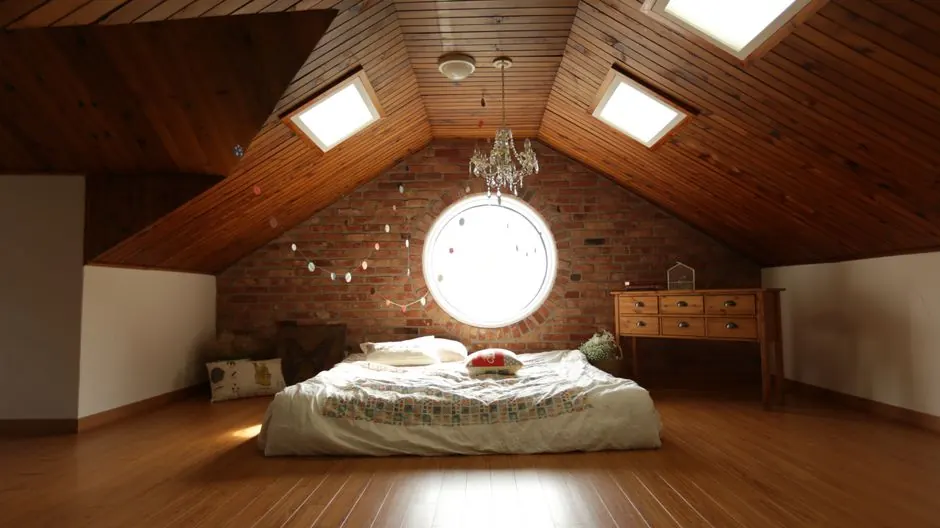
You find a roof leak in your attic by inspecting the underside of the roof deck after a hard rain, looking for dark water stains, rusted nail heads, and damp insulation - then tracing the water uphill to its actual entry point. The stain on your ceiling is almost never directly below the hole. Water enters at a flashing joint, a damaged shingle, or a cracked pipe boot, then runs along a rafter or roof sheathing before it drips onto the insulation below. That travel distance is exactly why a small leak can soak a 4-foot section of attic before you ever notice it.
This guide walks through how to find a roof leak in your attic step by step, what the warning signs look like in a Georgia home, and when the job is bigger than a tube of roof sealant. We do this work every week across metro Atlanta and North Georgia, and the leaks that cause the most damage are almost always the ones homeowners found two months too late.
Start With the Attic, Not the Ceiling Stain
How to find a roof leak in your attic begins with getting into the attic during or right after a steady rain, not on a dry afternoon. Water that has already dried leaves a stain but stops moving, which makes it far harder to trace. A wet, active leak shows you the path.
Bring four things: a bright LED flashlight, a screwdriver or awl, a roll of blue painter's tape, and a phone for photos. Wear long sleeves and a respirator if your insulation is older fiberglass - disturbed fiberglass in a hot Georgia attic is miserable.
Work methodically. Start at the highest point of the roof and move downslope, because water always runs downhill. Mark every suspicious spot with a strip of tape so you can compare after the next rain. If you find active dripping, photograph it before you touch anything.
Definition: attic roof leak detection is the process of locating the point where water enters the roof assembly and the path it takes through the attic, using visual inspection, moisture readings, and sometimes water testing.
If you'd rather not crawl through blown insulation on a 95-degree afternoon, our team handles roof leak detection in Georgia with infrared cameras and moisture meters that find the entry point in about an hour.
What Are the Signs of a Roof Leak in the Attic in Georgia?
The signs of a roof leak in your attic in Georgia show up in the wood, the insulation, and the metal before they ever reach your ceiling. Here's what to look for, roughly in order of how early they appear:
- Dark streaks on the roof sheathing - the plywood between rafters will show brown or black water tracks running downslope.
- Rusted or discolored nail heads - the nails poking through the sheathing rust first, and a ring of rust around a nail is a reliable leak marker.
- Damp or compressed insulation - wet fiberglass sags and loses loft; wet cellulose turns dark and clumps.
- A musty smell that won't go away - that's the early stage of attic mold, usually within 48 to 72 hours of sustained moisture.
- Daylight through the roof deck - turn off your flashlight and look up. Any pinhole of light is a hole in the roof.
- Peeling paint or bubbling drywall on the ceiling below, which means water has already traveled through the assembly.
One more sign that catches people off guard: a spike in your power bill. Wet insulation loses R-value fast, and a soaked attic in August forces your AC to run longer. A leak that adds $40 to $60 a month to your Georgia Power bill is common.
How Do I Trace a Roof Leak to Its Entry Point?
To trace a roof leak to its entry point, follow the water uphill from where it drips, and check the four spots where 90% of residential roof leaks start. Those four spots are:
- Chimney flashing - the metal where the chimney meets the roof plane. Failed step flashing and missing counter-flashing are the number one source we find.
- Pipe boots and vent stacks - the rubber collar around plumbing vents cracks after 10 to 15 years of Georgia sun. A cracked boot leaks every time it rains.
- Valley and sidewall flashing - where two roof planes meet, or where the roof meets a dormer wall.
- Field shingles and ridge caps - lifted, cracked, or missing shingles, especially after a hail event.
Once you have a suspect, run a controlled water test. Have a helper on the roof with a garden hose while you stay in the attic with a flashlight. Start low on the roof and work upward in 2-foot sections, letting the hose run on each section for a full 5 minutes before moving up. The moment you see water appear in the attic, you've found the entry point. Mark it.
If the leak only shows up during wind-driven rain, the entry point is likely a horizontal joint or a piece of flashing that only fails when water is pushed sideways. Those are the hardest to find without a moisture meter, and they're the ones we get called for most often in Leak Detection in Atlanta, where mature tree canopy and older 1960s-1980s rooflines create a lot of hidden flashing failures.
Why Georgia Roofs Leak More Than You'd Think
Georgia's climate is unusually hard on roofs, and that's why a roof leak in an attic in a Georgia home tends to appear earlier than the shingle warranty suggests. Three forces do most of the damage:
Heat and UV. Atlanta and Middle Georgia regularly hit 95°F to 100°F in July and August. That heat bakes asphalt shingles, dries out pipe boot rubber, and expands and contracts flashing until the sealant fails. A pipe boot that lasts 20 years in Ohio might last 10 to 12 here.
Afternoon thunderstorms. Georgia gets intense, short-duration downpours from May through September. Those storms push water sideways into joints that a gentle rain would never reach. That's why so many leaks seem to appear out of nowhere after a summer storm.
Pollen, pine straw, and tree debris. North Georgia's pine trees drop needles that clog valleys and gutters, which backs water up under shingles. If you live under pines in Leak Detection in Marietta or anywhere along the I-75 corridor, plan on clearing valleys twice a year.
Winter adds a fourth problem in North Georgia: freeze-thaw cycles. Water seeps into a small crack, freezes overnight, expands, and widens the crack. By spring, a hairline gap has become a real opening. We see this pattern every March in Leak Detection in Gainesville and the surrounding lake communities.
Common Mistakes That Let a Roof Leak Spread
The most common mistake is sealing the ceiling stain instead of the roof. Painting over a water stain with Kilz hides the evidence and traps moisture in the drywall, which is exactly how mold starts.
Other mistakes we see constantly:
- Assuming the leak is directly above the stain. Water can travel 10 to 15 feet horizontally along a rafter before it drops.
- Using caulk as a permanent fix. A tube of roof sealant buys you a season, maybe two. It is not a repair.
- Walking the roof in wet conditions. Asphalt shingles are dangerously slick when wet, and Georgia roofs grow a thin layer of algae that makes them worse.
- Ignoring a small leak because it only drips in heavy rain. That "only in heavy rain" leak is the one that rots your decking over two winters.
- Skipping the attic after a storm. A 15-minute attic check after any hail or wind event catches damage while it's still cheap to fix.
One more: don't assume a newer roof is safe. We find leaks on 5-year-old roofs all the time - usually from installation errors at the flashing, not from worn shingles.
When to Call a Professional
Call a professional when you've done the attic inspection and either can't find the entry point, or you've found it and it involves flashing, valleys, or anything you'd have to remove shingles to reach. Those are the repairs where a bad DIY job turns a $400 fix into a $4,000 deck replacement.
You should also call us if the leak has been active for more than a week, if you see or smell mold, or if the water is anywhere near electrical wiring or a recessed light fixture. Water and 120-volt wiring in the same attic cavity is a fire risk, not a maintenance item.
Our technicians at Pro Leak Detection use infrared imaging and pin-type moisture meters to map the full extent of the leak - not just the entry point - so you know exactly what's wet and what's still dry. We find the leak, document it with photos, and give you a written scope before any repair starts. If the fix is a $250 pipe boot replacement, that's what we'll tell you.
If you're also chasing water somewhere else in the house, our water leak detection in Georgia service covers everything from slab leaks to hidden supply line failures.
How Much Does Roof Leak Repair Cost in Georgia?
Roof leak repair in Georgia in 2026 typically runs $350 to $1,200 for a localized fix, with the average homeowner paying around $650. The range depends almost entirely on what's leaking and how much access the repair requires.
- Pipe boot replacement: $250-$450
- Chimney or sidewall flashing repair: $400-$900
- Valley repair with shingle replacement: $600-$1,500
- Full roof section replacement (rotted decking): $1,800-$5,000+
- Attic mold remediation (if the leak went untreated): $1,500-$6,000
Professional leak detection itself usually costs $200 to $450 in metro Atlanta, and most companies - including ours - credit that fee toward the repair if you hire us to do the work. That's the cheapest money you'll spend on the whole problem, because it prevents you from paying a roofer to replace the wrong section.
Insurance may cover part of the repair if the damage came from a covered event like hail or wind. Document everything with photos before you touch a thing.
Frequently Asked Questions
How do I find a roof leak in my attic in Georgia?
Get in the attic during or right after a steady rain with a bright flashlight. Look for dark streaks on the sheathing, rusted nail heads, and damp insulation. Trace the water uphill to its entry point, then confirm with a controlled hose test on the roof.
What are the signs of a roof leak in the attic in Georgia?
The earliest signs are dark water streaks on the roof sheathing, rust rings around nail heads, and damp or sagging insulation. Within 48 to 72 hours you'll also notice a musty smell, which means mold has already started. Ceiling stains show up last.
Who fixes roof leaks in Georgia?
Licensed roofing contractors handle the repair itself, and leak detection specialists locate the source first. Pro Leak Detection finds and documents the leak across Georgia, then coordinates the repair - so you're not paying a roofer to replace shingles that were never the problem.
How much does roof leak repair cost in Georgia?
In 2026, most Georgia roof leak repairs run $350 to $1,200, averaging around $650. Detection alone is $200 to $450 and is usually credited toward the repair. Untreated leaks that reach the decking or cause mold can push total costs past $5,000.
Can a roof leak cause mold in the attic in Georgia?
Yes, and it happens fast. Georgia's summer humidity means attic mold can start within 48 to 72 hours of sustained moisture. By the time you smell it, remediation typically costs $1,500 to $6,000 - far more than fixing the leak would have.
Get Help With Leak Detection in Georgia
If you've found water in the attic and can't pin down the source, we'll find it for you. Our team covers metro Atlanta and North Georgia with infrared imaging and moisture mapping, and we'll tell you straight whether it's a $300 fix or something bigger.
Call Pro Leak Detection at +1 (888) 682-0578 to schedule an attic inspection. We'll be in your attic, find the leak, and have a plan in your hands the same day.