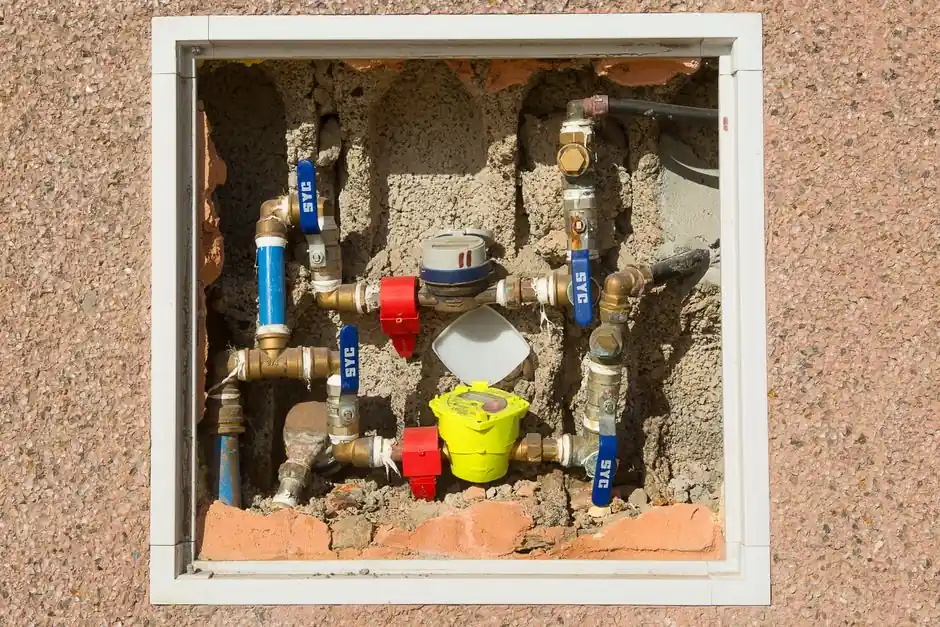
You can detect an underground water leak in your yard by shutting off every fixture in the house, watching your water meter's low-flow indicator for 15 minutes, and walking the yard for spongy turf, greener-than-normal grass, or a wet patch that never dries. If the meter's triangle or dial still moves with everything off, water is escaping somewhere between the meter and the house. This guide walks through the exact signs Georgia homeowners see, the meter test you can run today, and how our team pinpoints the break without tearing up half the lawn.
What an underground water leak actually is
An underground water leak is a break or failure in a buried water line - the service line from the meter to your house, an irrigation main, a pool fill line, or a sewer lateral - that lets water escape into the soil instead of reaching its destination. Most yard leaks in Georgia start at a joint, a compression fitting, or a section of polybutylene or older galvanized pipe that has finally given out after 20 to 40 years in the ground.
Because the pipe is buried 18 to 36 inches down, you rarely see the water itself. You see what it does to the ground above it. That is why a yard water leak is often mistaken for poor drainage, a sprinkler problem, or just a wet spring. By the time a sinkhole opens under a driveway, the leak has usually been running for weeks.
Signs of an underground water leak in Georgia
The signs of an underground water leak in Georgia show up in three places: your water bill, your yard, and your foundation. Check all three before you assume the worst.
- Water bill spike. A jump of 20,000 to 50,000 gallons in one billing cycle with no change in habits is the single most common flag we see.
- Spongy or sunken turf. A strip of grass that squishes when you walk it, or a low spot that appears overnight, usually sits directly over the break.
- One patch of grass that stays greener. In a Georgia July, a bright green stripe in an otherwise brown lawn is a leak, not luck.
- Water bubbling up near the meter box or curb. That points to a service line break on the city side or right at the meter.
- Muddy or unusually wet soil along the fence line. Irrigation main leaks love fence rows and bed edges.
- Foundation cracks or a sticking door. A slow leak under a slab can move soil and shift the structure above it.
- Sound of running water at night. Stand in the yard at 2 a.m. with the house quiet. If you hear a hiss or trickle, you have a pressurized leak.
If two or more of those line up, stop watering the lawn for 48 hours and run the meter test below. That single step separates a real underground leak from a sprinkler head that is just stuck on.
How do I detect an underground water leak in my yard in Georgia?
You detect an underground water leak in your yard in Georgia by isolating the system first, then testing the meter, then walking the line. Do it in that order and you will know within an hour whether you are chasing a real leak or a phantom.
Step 1: Shut everything down
Turn off the irrigation controller at the breaker, close the pool auto-fill valve, and make sure no toilet is running and no ice maker is cycling. A running toilet can move 200 gallons a day and will wreck your test.
Step 2: Find your meter and read the low-flow dial
Most Georgia meters sit in a concrete or plastic box near the curb. Lift the lid, wipe the face, and look for the small red triangle or the sweeping low-flow dial. That dial spins any time even a trickle of water moves through the meter.
Step 3: Watch it for 15 minutes
With everything off, note the position of the triangle. Wait 15 minutes. If it moved at all, water is leaving the system. If it is dead still, your leak is likely on the irrigation side or already stopped.
Step 4: Walk the line
Trace the path from the meter to the house and probe the soil with a long screwdriver every 3 to 4 feet. Soft spots, easy penetration, and a faint sewer or musty smell are your targets. Mark them with landscape flags.
The water meter test: your fastest DIY check
The water meter test is the only DIY method that gives you a yes-or-no answer without digging. Here is how to read the result:
- Triangle spinning with everything off = active leak on the pressurized side.
- Triangle still, but bill is high = intermittent leak (toilet flapper, irrigation valve, pool auto-fill).
- Triangle spins only when the irrigation zone runs = leak inside that zone.
- Triangle spins backward or erratically = call the city; the meter itself may be faulty.
If you confirm an active leak, shut off the main at the meter box before you do anything else. That stops the water loss and the damage while you decide on next steps. For homeowners who want the leak located and repaired in one visit, our underground leak detection in Georgia team uses acoustic listening and tracer gas to mark the exact break before we dig.
Acoustic and pressure testing: how pros pinpoint the leak
Acoustic and pressure testing is how a professional finds an underground leak in a yard without trenching the whole property. We pressurize the line to a known PSI, isolate sections with valves, and listen.
A buried pipe leak makes noise - a hiss, a rush, or a low-frequency thump that travels through the soil. We use a ground microphone and a correlator that compares the sound at two points on the line and calculates the leak's location to within about 12 inches. On PVC and poly lines, we also inject a safe tracer gas and sweep the surface with a detector; where the gas escapes, the pipe is broken.
For irrigation systems, we isolate each zone and watch the pressure gauge. A zone that will not hold 40 PSI has a break, and the gauge drop rate tells us roughly how big it is. That is the same approach we use on irrigation system leak detection in Georgia calls, and it saves customers hundreds in sod and labor because we dig one hole, not ten.
If the leak has already worked its way under the house, the fix moves indoors. Water migrating along a footer can show up as a warm spot on the floor or a spike on the water heater. That is when we shift to slab leak detection in Georgia and use thermal imaging plus pressure isolation to confirm the line under the slab is the source.
Common mistakes homeowners make
The most expensive mistake is digging before you locate. A backhoe trench across a lawn costs $800 to $2,500 in sod and irrigation repair alone, and it still may miss the break by 10 feet.
- Assuming the city will fix it. In most Georgia systems, the homeowner owns the line from the meter to the house. The city owns the meter and the main. Know which side you are on before you call.
- Blaming the irrigation when the service line is leaking. Run the meter test with the irrigation breaker off. That isolates the two systems in one step.
- Ignoring a small bill bump. A pinhole leak at 60 PSI can waste 6,000 gallons a month. Over a year, that is real money and real soil movement.
- Patching the visible wet spot. Water travels along the trench backfill. The wet spot is often 5 to 15 feet downhill from the actual break.
- Waiting until the sinkhole appears. By then you are looking at foundation repair, not just pipe repair.
One more: do not pressure-test a line yourself above the rating stamped on the pipe. A 100 PSI test on 40-year-old polybutylene will turn a small leak into a blown joint.
When to call a professional
Call a professional when the meter test confirms an active leak and you cannot see water at any fixture, when the wet spot is within 5 feet of the foundation, or when you have already dug once and missed. Those three situations almost always mean the break is buried and the cost of guessing is higher than the cost of locating.
We handle this every day across metro Atlanta and the surrounding counties. Our technicians arrive with acoustic equipment, line locators, and thermal cameras, mark the break, and give you a flat price to repair before any digging starts. If you are on a well or a private line, we test that too - the process is the same, just without a city meter to read.
Homeowners in older neighborhoods with 1960s and 1970s galvanized service lines should treat any bill spike as urgent. Those pipes corrode from the inside out, and a leak that starts as a weep can open into a full break overnight. If you are in one of the historic districts around Leak Detection in Savannah, the high water table there makes an underground leak harder to spot because the soil is often damp anyway. We adjust our testing for that - more reliance on acoustic correlation, less on surface moisture.
How much does underground leak detection cost in Georgia?
Typical 2026 pricing in Georgia for underground leak detection runs $250 to $600 for a residential yard, with most single-family homes landing around $350 to $450. That covers the site visit, meter verification, acoustic and pressure testing, and marking the break.
Repair is separate and depends on depth, pipe material, and surface. A shallow PVC irrigation main repair might run $300 to $700. A service line under a driveway or mature landscaping can hit $1,500 to $3,500 once you add excavation and restoration. Emergency or after-hours calls add $100 to $250.
Compare that to the alternative. A leak running at 3 gallons per minute wastes 129,600 gallons a month. At Georgia rates of roughly $6 to $12 per 1,000 gallons, that is $780 to $1,550 in water alone - before any foundation damage. Detection pays for itself in the first billing cycle.
We quote the detection fee up front and credit it toward the repair if you hire us to fix the line. No surprise line items.
Frequently Asked Questions
How do I detect an underground water leak in my yard in Georgia?
Shut off all fixtures and irrigation, then watch your water meter's low-flow triangle for 15 minutes. If it moves, you have an active leak. Walk the line from meter to house probing for soft soil. If the meter is still, the leak is likely on the irrigation side or intermittent.
What are the signs of an underground water leak in Georgia?
The top signs are a water bill jump of 20,000 gallons or more, a spongy or unusually green patch of lawn, water bubbling near the meter box, and foundation cracks. In Georgia's clay soils, a leak often shows as a sunken strip rather than a visible puddle.
Who do I call for an underground water leak in Georgia?
Call a licensed leak detection company that uses acoustic and pressure testing, not a general handyman. Pro Leak Detection serves homeowners statewide and can locate the break before any digging. If the leak is on the city side of the meter, call your water utility first.
How much does underground leak detection cost in Georgia?
Expect $250 to $600 for residential detection in 2026, with most homes around $350 to $450. Repair runs $300 to $3,500 depending on depth, pipe material, and whether concrete or landscaping has to be restored. After-hours calls add $100 to $250.
Can I find an underground leak myself in Georgia?
You can confirm that a leak exists with the meter test, and you can narrow the area by probing for soft soil. You cannot reliably pinpoint a buried break without acoustic or tracer-gas equipment. Digging on a guess usually costs more in sod and labor than professional detection.
Get help with Leak Detection in Georgia
If your meter is spinning and your yard is soft, we can find the break and fix it before it costs you a foundation. Pro Leak Detection handles underground leak detection and repair across Georgia with upfront pricing and same-week scheduling.
Call +1 888 682 0578 and we will get a technician out to mark the leak and give you a flat repair quote.